


Author: Honda San Carlos
Choosing how to acquire your next Honda is a major financial step, just as important as selecting the perfect model for life on the Peninsula. The decision between financing a vehicle to own it or leasing it for a few years can seem complex. As a dealership with deep roots in the community, Honda San Carlos has helped thousands of drivers from San Mateo to Menlo Park navigate this exact choice, and we are dedicated to sharing our expertise with you.
Key Takeaways (TL; DR)
- Ownership vs. Flexibility: Financing your Honda is a direct route to full ownership, allowing you to build equity. Leasing offers the benefit of driving a new vehicle every few years with typically lower monthly costs, similar to a long-term rental.
- The Power of Your Credit Profile: Your credit history is the most significant factor influencing the rates and terms lenders will offer. A strong credit score can substantially reduce your borrowing costs for both financing and leasing in the Bay Area.
- Honda's In-House Financial Partner: Honda Financial Services (HFS) is the brand's exclusive financing arm, providing a streamlined application, competitive rates, and special incentives available only through authorized dealers like us.
- Navigating the End of Your Lease: When your Honda lease concludes, you have three flexible choices: buy your current vehicle, lease or finance a new 2026 model, or simply turn in the keys and walk away.
- California Tax Considerations: In California, sales tax is based on your city of residence and applied to the monthly payments when you lease. When you finance, sales tax is calculated on the vehicle's full purchase price.
- Preparation Simplifies Everything: Make your dealership experience seamless by gathering key documents like proof of income, checking your credit report in advance, and defining a clear budget for your next Honda.
What is Automotive Financing?
Automotive financing is the most conventional way to purchase a car. It means you secure a loan from a financial entity—like Honda Financial Services, a national bank, or a local credit union in San Mateo County—to cover the entire cost of the vehicle. You then repay this loan, plus interest, through regular monthly installments over a set period, which is known as the loan term. When you decide to finance, you are on the path to becoming the full owner of your Honda.
With each payment, you build equity, which is the portion of the vehicle's value that you legally own. After the final payment is made, the lender removes their lien from the vehicle's title, and it is entirely yours. This is a fantastic option for drivers in Redwood City or Foster City who intend to keep their Honda for many years. It gives you the freedom to customize your vehicle and drive without mileage caps—perfect for the daily commute on Highway 101 or weekend trips up to the Marin Headlands.
How Does Honda Financial Services (HFS) Work for Local Drivers?

Honda Financial Services (HFS) is the official lending division established exclusively for the Honda brand. Its primary mission is to offer customers a smooth, integrated payment experience directly through the dealership. HFS acts as a one-stop shop, delivering competitive rates and specialized programs engineered specifically for Honda customers.
HFS works in direct partnership with authorized dealerships such as Honda San Carlos. Once you've chosen your new 2026 Honda CR-V, a versatile vehicle for navigating anything from coastal fog to summer heat, or a highly efficient 2026 Accord Hybrid for your commute across the Dumbarton Bridge, you can apply for HFS financing right here with our team. Many of our customers from Menlo Park and beyond even begin the process from the comfort of their home using our online tools.
The HFS team reviews your application, considering elements like your credit history and income to decide your eligibility for a loan or lease. As a part of the official Honda ecosystem, HFS can often grant access to exclusive offers you won't find from third-party banks. These may include special Annual Percentage Rates (APRs) on specific models or loyalty benefits for returning Honda drivers.
What is Involved in Leasing a Honda in the Bay Area?
Leasing a Honda can be compared to a long-term rental contract. Instead of financing the vehicle's entire value, you are paying to use it for a fixed term, usually between 24 and 48 months. Your monthly lease payment is designed to cover the vehicle's expected depreciation—the difference between its initial selling price and its estimated value at the end of the lease, a number known as the residual value. You also pay interest charges, called the money factor, and any related fees.
This payment arrangement almost always leads to lower monthly payments than financing the identical vehicle. Leasing is an excellent choice for San Carlos drivers who appreciate having the newest technology, advanced safety features, and modern designs every few years. It also provides a predictable, lower monthly transportation cost, which simplifies personal budgeting. It’s a great fit for someone who prioritizes flexibility and wishes to avoid the long-term responsibilities associated with ownership.
What Choices Do I Have When My Honda Lease Ends?
At the conclusion of your Honda lease term, you are presented with three main options that provide remarkable flexibility. You can opt to purchase the vehicle you've been driving, transition into a new lease or finance agreement, or simply return the vehicle and conclude the contract. This freedom of choice is one of the most attractive aspects of leasing. Your ideal path will be determined by your experience with the car, your current financial standing, and your driving needs for the future.
- Purchase Your Leased Honda: If you've grown to love your vehicle and its performance has been exceptional, you have the option to buy it. The purchase price is its residual value, which was established and locked in your original agreement, eliminating any surprises. This can be a savvy financial decision if the vehicle's current market value, which you can research on a platform like Kelley Blue Book (KBB), is greater than its residual price.
- Lease or Finance a New 2026 Honda: Many drivers see the end of a lease as the perfect opportunity to get behind the wheel of another new car. You can turn in your current vehicle and seamlessly sign a new lease or finance contract for a brand-new 2026 model. Honda frequently offers loyalty incentives to thank returning customers for their continued trust.
- Return Your Vehicle: If your lifestyle has changed—perhaps your commute from San Mateo is now shorter, or your family needs a larger vehicle like the 2026 Honda Pilot for trips to Filoli Historic House & Garden—you can simply return the car. A complimentary end-of-lease inspection is scheduled to assess any wear or mileage that exceeds the contractual limits, which could result in additional charges. After your account is settled, you are free to walk away.
What Are the Fundamental Differences Between Financing and Leasing?

The core distinction between financing and leasing comes down to one word: ownership. Financing is a journey toward owning your vehicle outright, while leasing is effectively renting it for a defined period. This single difference shapes everything from your monthly payment amount to your responsibilities as a driver. Grasping these contrasts is essential for aligning your choice with your personal and financial goals. A driver who values building an asset and wants the freedom to personalize has different priorities than someone who prefers a new car every few years with minimal fuss.
| Feature | Financing a Honda | Leasing a Honda |
|---|---|---|
| Ownership | You own the car and get the title after the loan is fully paid. | You don't own the car; HFS or the leasing company holds the title. |
| Monthly Payments | Payments are higher as they cover the car's full value plus interest. | Payments are lower since you're mainly paying for depreciation during use. |
| Upfront Costs | A down payment of 10-20% is often suggested to lower monthly costs and total interest. | You generally pay the first month's payment, a security deposit, and acquisition fees. |
| Customization | You have total freedom to modify your vehicle or install any accessories you wish. | Modifications are not allowed; the vehicle must be returned in its original state. |
| Mileage | There are no limits. Drive from San Carlos to Lake Tahoe and back as much as you like. | Leases have yearly mileage allowances (e.g., 10,000 or 12,000 miles), with fees for going over. |
| Wear & Tear | Normal wear is part of ownership, but excessive damage lowers its trade-in or resale value. | You are responsible for any wear and tear beyond the "normal" standards in your contract. |
| End of Term | Once the loan is paid off, you have an asset to keep, sell, or trade in. | You can return the car, buy it for its residual value, or lease a new Honda. |
What Factors Shape My Financing or Lease Terms?
Several critical elements will influence the financing or lease terms you're offered, with your credit score and down payment carrying the most weight. Lenders use this data to evaluate risk and calculate the interest rate and conditions they can extend. A strong application can save you thousands of dollars over the duration of your contract. In contrast, a weaker financial profile might result in higher costs or make it more challenging to secure an approval.
- Your Credit Score: This three-digit number, summarizing your credit history from bureaus like Equifax, Experian, and TransUnion, is a primary gauge of your financial responsibility. A higher score, generally 670 or above, typically unlocks more favorable interest rates. A lower score could lead to higher rates or the requirement of a larger down payment.
- The Down Payment: A more substantial initial payment lowers the total amount you need to borrow. For financing, this means a smaller loan, less interest paid over the long run, and a lower monthly payment. In a lease, this upfront sum is called a capitalized cost reduction and also works to decrease your monthly payments.
- Loan or Lease Term Length: The duration of your agreement has a direct effect on your monthly payment. A longer term, such as 72 or 84 months, provides a lower payment but means you will pay significantly more in total interest. A shorter term, like 36 or 48 months, comes with higher payments but saves you a considerable sum in interest charges.
- Vehicle Price and Type: The vehicle's cost is the starting point for your loan or lease calculation. Additionally, manufacturers like Honda frequently introduce more attractive promotional finance and lease deals for new models compared to pre-owned vehicles.
- Your Income and Debt-to-Income Ratio: Lenders need to verify you have a steady income to comfortably manage the monthly payments. They assess your debt-to-income (DTI) ratio to ensure the new car payment won't overstretch your budget.
Are There Special Honda Programs I Should Know About?
Yes, Honda offers several unique financing and lease programs designed to help specific buyer groups save money. These initiatives provide rebates or special interest rates for eligible customers, making it more affordable to get into a new Honda. These programs are crafted to reward loyalty and support members of our Bay Area community. It's always beneficial to ask our team which programs you might qualify for.
- Honda College Graduate Program: Recent and upcoming college graduates, including those from local institutions like Stanford University or Santa Clara University, can receive a rebate when they finance or lease a new Honda model. You will generally need to provide proof of graduation and employment to be eligible.
- Honda Military Appreciation Offer: To express gratitude for their service, Honda provides a rebate to eligible U.S. military members. This offer applies to active duty personnel, reservists, retirees, veterans within a certain period after separating from service, and their spouses.
- Honda Loyalty Rewards: If you are a current registered owner of a Honda vehicle, you may be eligible for loyalty benefits when you finance or lease a new model. These offers can change but are created as a thank-you for remaining in the Honda family.
- Dealership and Regional Promotions: In addition to national offers from Honda, local dealerships often conduct their own promotions. These might include aggressive lease specials on certain models like the 2026 CR-V Hybrid or finance deals you won't find advertised elsewhere.
For more in-depth research on vehicle pricing, specifications, and expert reviews, resources like Edmunds provide valuable estimates and consumer reports.
How Do I Apply for Honda Financing or a Lease?

Applying for a Honda financing or lease agreement is a straightforward procedure that you can start online or finish at our dealership in San Carlos. The first step is often getting pre-qualified, which provides an estimate of what you can afford without affecting your credit score. Organizing your required documents in advance will make the entire application process quicker and more efficient. Our primary goal is to get you from shopping to driving your new Honda with minimal fuss.
Here is a quick summary of the steps involved:
- Get Pre-Qualified Online: Our dealership website, along with the official HFS site, offers a simple pre-qualification tool. By entering some basic financial details, you can see potential rates and terms in just a few minutes.
- Gather Your Documents: To submit a complete credit application, you will need a few essential documents. These typically include a valid driver's license, proof of income (such as recent pay stubs), proof of residence (a recent utility bill is perfect), and proof of auto insurance.
- Complete the Full Application: You can fill out the detailed credit application online or sit with our finance team in person. This step does require a "hard" credit inquiry, which is recorded on your credit report.
- Review and Sign the Contract: Once your application is approved, our finance manager will review the loan or lease agreement with you. This is the ideal moment to ask any remaining questions about the APR, term length, monthly payment, or optional vehicle protection plans before you sign the final documents.
How Does California's Sales Tax Work for Vehicles?
When you buy or lease a vehicle in California, you are required to pay sales tax. However, the application of this tax differs for financing versus leasing, and the rate is determined by your city of residence, not where you buy the car.
For a financed vehicle, sales tax is calculated on the full negotiated purchase price. For a resident of San Carlos, for example, the local district sales tax rate is applied. This total tax amount is usually paid upfront or can be included in your total loan amount.
For a leased vehicle, you only pay sales tax on your monthly payments and any capitalized cost reduction (down payment). The tax is applied to each payment throughout the lease term rather than being charged on the car's entire value at the start. This structure can make the upfront cost of leasing even more attractive. These tax revenues are critical for funding the maintenance of our state's infrastructure, including vital arteries like Highway 101, I-280, and local roads in San Carlos. For definitive information, the California Department of Tax and Fee Administration is an authoritative source.
What Are the Benefits and Drawbacks of Each Option?
Deciding between financing and leasing demands that you carefully consider the pros and cons of each choice in the context of your personal circumstances. Financing offers the long-term advantage of ownership, while leasing provides the short-term benefits of lower payments and access to the newest models. There is no single "right" answer; the best choice is a personal one. Consider how long you plan to keep the car, your annual mileage commuting around the Peninsula, and whether building an asset is more important than the appeal of a new car every few years.
Pros of Financing a Honda
- Ultimate Ownership: After the final payment, the car is 100% yours to keep, sell, or trade.
- No Mileage Restrictions: Drive as much as you want for work, errands, or road trips without concern for penalties.
- Freedom to Personalize: You can add accessories, upgrade components, or make any modifications you desire.
- Building Equity: Each payment you make increases your ownership share in a valuable asset.
Cons of Financing a Honda
- Higher Monthly Payments: Your payments will be more than a lease for the same model since you are covering the full value.
- Long-Term Maintenance: As the vehicle ages and the factory warranty ends, you are responsible for all repair costs.
- Depreciation Impact: The vehicle’s value decreases over time, which will affect its eventual resale or trade-in value.
Pros of Leasing a Honda
- Lower Monthly Payments: Enjoy driving a new vehicle for a smaller monthly cost.
- Drive New Models More Often: Get the latest safety features, technology, and designs every few years.
- Fewer Maintenance Worries: Most of the lease term is covered by the manufacturer's warranty, minimizing unexpected repair bills.
- No Resale Hassle: At the end of the lease, you just return the vehicle and sidestep the process of selling it yourself.
Cons of Leasing a Honda
- No Ownership Equity: You are renting the vehicle and will not have an asset at the end of the term.
- Mileage Limitations: Going over the annual mileage cap results in per-mile charges that can add up quickly.
- Wear-and-Tear Fees: You could be charged for damage that is deemed beyond the "normal" use defined in your contract.
- No Customization Allowed: The vehicle must be returned in its original, unmodified state.
What Are Some Strategies for Getting the Best Deal?

Securing the best possible deal on your Honda financing or lease requires a mix of good timing, diligent research, and savvy negotiation. By becoming an informed consumer, you can save a substantial amount of money. Arming yourself with knowledge before you walk into our San Carlos dealership gives you a powerful advantage.
- Check Your Credit Score First: Knowing your score from a source like Consumer Reports beforehand provides a clear picture of the rates you can qualify for. It also gives you a chance to find and dispute any errors on your credit report that might be negatively impacting your score.
- Shop Around for Financing: Don't feel you have to accept the first financing offer you get. Obtain quotes from your own bank or a local credit union to compare against the dealership's offer. This creates leverage and helps ensure you get a competitive rate. A helpful resource for comparing lenders is NerdWallet.
- Time Your Purchase Strategically: Dealerships are often most eager to make deals at the end of the month, quarter, or model year as they work to meet sales objectives. Major holiday sales events are also excellent times to find special promotions.
- Negotiate the Vehicle Price First: The car's sale price is the cornerstone of your entire transaction. Agree on a final purchase price before you start discussing financing or leasing terms to keep the negotiation clear and focused.
- Understand All the Numbers: For a lease, concentrate on the capitalized cost (the car's price), the residual value, and the money factor (the interest rate). For a finance deal, focus on the total loan amount, the Annual Percentage Rate (APR), and the term length to fully grasp the true cost of borrowing.
Frequently Asked Questions (FAQs)
What credit score is needed for Honda financing in San Carlos?
While Honda Financial Services accommodates a wide range of credit profiles, a score in the prime tier (typically 670 or higher) is often necessary to qualify for the most favorable offers. To secure top-tier promotional rates, like 0.9% or 1.9% APR, a credit score above 720 is generally required by lenders in the competitive Bay Area market.
Is it difficult to get approved by Honda Financial Services?
Approval is not inherently difficult, as HFS strives to assist a broad spectrum of buyers. Gaining approval for a standard loan is typically more straightforward than qualifying for the most aggressive promotional rates. Factors such as a stable income, a reasonable down payment, and a low debt-to-income ratio will significantly bolster your application.
Does Honda offer 0% financing?
Honda does periodically extend 0% financing on select new models to highly qualified buyers with excellent credit. These promotions are usually for shorter loan durations (e.g., 36 or 48 months) and are often featured during national or regional sales events advertised in the San Carlos area.
Can you negotiate the price on a Honda lease?
Yes, you can and should negotiate the price of a leased Honda. The vehicle's negotiated sale price, known as the capitalized cost, is a primary component in calculating your monthly payment. Securing a lower capitalized cost will directly reduce what you pay each month for your lease.
About Honda San Carlos
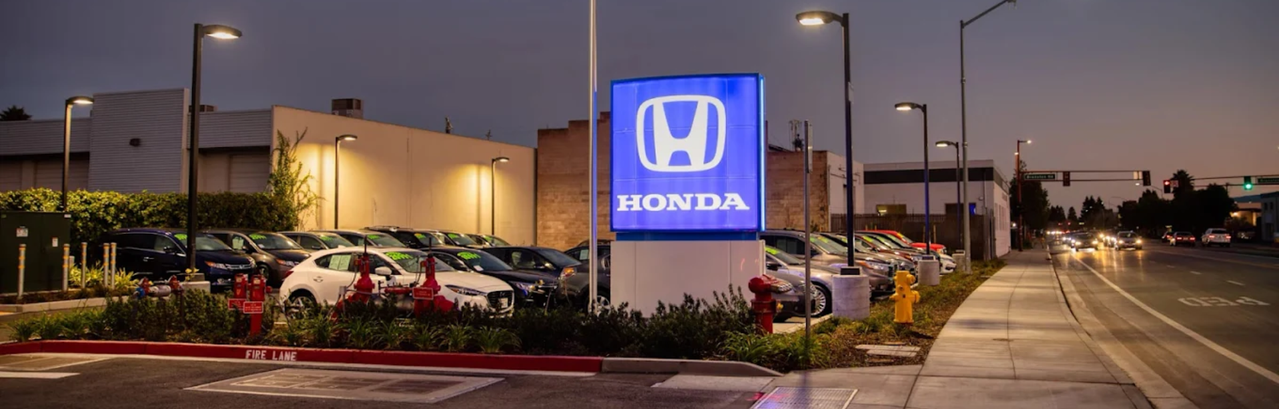
Honda San Carlos has been a trusted, family-owned dealership serving our community since 1965, and we are proud of our newly remodeled showroom. Our team, which includes Spanish-speaking members, is dedicated to providing an excellent experience for every customer. We are honored to have earned the Honda Financial Services Council of Excellence award for our commitment to exceptional service. During your visit, you can relax in our comfortable customer lounge or get work done in our dedicated customer work area. We invite you to experience our award-winning service and see why we have been a community staple for decades.Related Article: A Bay Area Driver's Guide to Choosing a Honda Dealership
